
SEMCO
Get a Quote
Evaporators

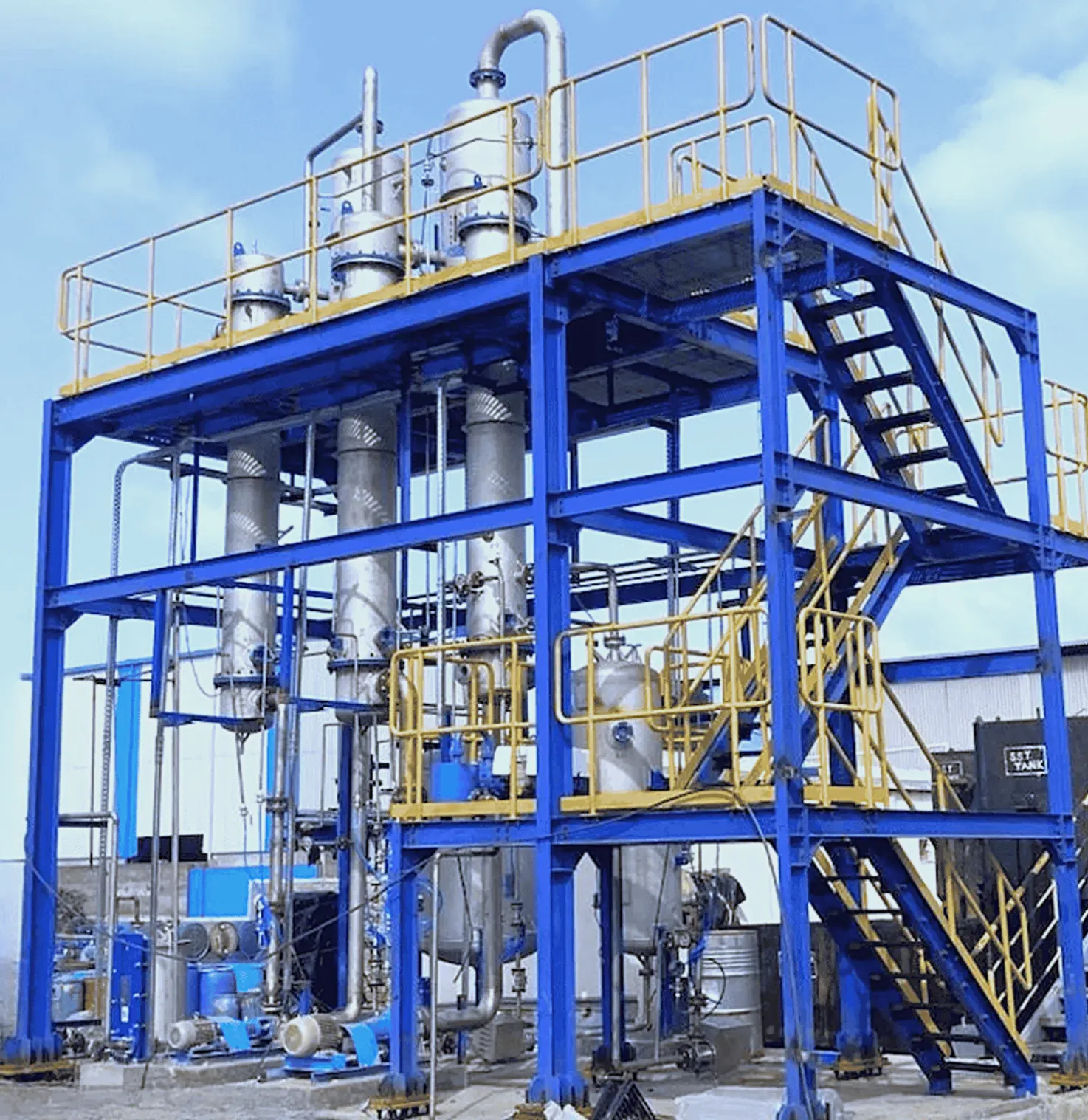
Multi-Effect Evaporator (MEE)

**Information Summary:** A Multi-Effect Evaporator (MEE) is an advanced thermal apparatus designed for high-efficiency water evaporation using latent heat recovery. **Technical Specifications:** - Operating Principle: Sequence of vessels operating at progressively lower pressures. - Thermal Efficiency: Maximized via steam recycling across multiple effects. - Primary Applications: Effluent treatment, Zero Liquid Discharge (ZLD), chemical concentration, and salt recovery.

At SEMCO, we design and manufacture high-performance Multi-Effect Evaporators (MEE) tailored for the efficient concentration of solutions and robust industrial effluent treatment. Our engineered systems maximize heat transfer across multiple stages, significantly reducing the overall energy consumption of your process. To ensure the best possible steam economies and minimize your operational OPEX, we seamlessly integrate our MEE plants with advanced Mechanical Vapor Recompression (MVR) and Thermal Vapor Recompression (TVR) technologies.

Multi-Effect Evaporator (MEE)

SEMCO Process Equipment

Multi-Effect Evaporator (MEE)

Technical Specifications & Features

  • High-performance multi-effect concentration
  • Engineered for robust industrial effluent treatment
  • Multiple effects maximize heat recovery and steam economy
  • MVR/TVR integration for lower OPEX
  • Optimized thermal design for energy-efficient operation
  • Custom-built plant configurations
Request a Quote
Technical Publication

The Definitive Engineering Guide to Multi-Effect Evaporators (MEE)

A comprehensive analysis of multi-effect evaporator design, thermodynamic principles, steam economy, and operational heuristics for Zero Liquid Discharge (ZLD) and chemical processing.

Published by SEMCO Process Engineering TeamApr 2026
Read Sizing & Engineering Guide
Support & Info

Technical Frequently Asked Questions

What is the maximum viscosity handled by the Multi-Effect Evaporator?

Our MEE systems can handle varying viscosities up to 300 cP. For highly viscous or crystallizing solutions, we integrate forced circulation or Agitated Thin Film Dryers (ATFD) to prevent scaling and ensure continuous operation.

How does the MEE system achieve Zero Liquid Discharge (ZLD)?

The MEE reduces the liquid volume by evaporating the solvent (water). The remaining concentrated slurry is then passed to an ATFD or crystallizer, separating the solid waste from the pure condensate, which can be reused in the plant.

What materials of construction (MOC) are used for corrosive effluents?

We utilize highly corrosion-resistant materials including SS316L, Duplex Steel, Titanium, and Hastelloy, depending on the chloride concentration and pH of the specific chemical effluent.

Where We Deploy

Typical Applications

Effluent Treatment & ZLD: Achieving Zero Liquid Discharge for complex industrial wastewater
Chemical Manufacturing: Concentration of textile chemicals, detergents, and specialty chemical intermediates
Pharmaceuticals: Efficient solvent recovery and concentration of active ingredients
Food & Beverage: Evaporation processes for dairy, fruit juices, and plant extracts

Need a Custom Multi-Effect Evaporator (MEE)?

Our engineers will design and fabricate the right solution for your specific process requirements.